Closed-Cell Spray Foam Insulation
Our densest, highest-R-value spray foam. Closed-cell delivers roughly R-6 to R-7 per inch, adds real structural rigidity to the assemblies it's sprayed into, and blocks moisture cold — the right call anywhere cavity space is tight or dampness is a concern.
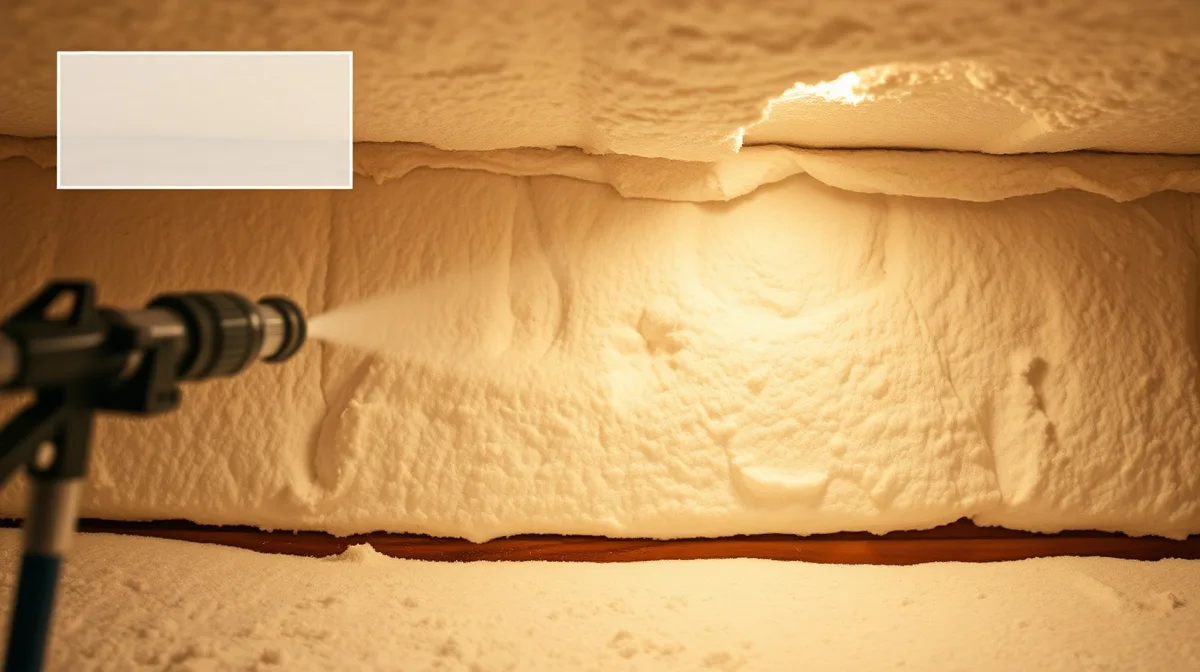
Closed-cell spray foam is the densest, highest-performing insulation material we install, and because spray foam is the only thing we do, we spec it where it actually earns its cost instead of defaulting to whatever's cheapest to spray. At roughly R-6 to R-7 per inch, closed-cell packs more thermal resistance into less cavity depth than any other insulation product used in the White Mountains, which matters anywhere framing, joist depth, or existing construction leaves you with limited space to work with. The cell structure itself is rigid and fully closed, meaning the cured foam doesn't just insulate — it adds measurable structural strength to the wall, roof deck, or floor assembly it's bonded to, and it forms a continuous moisture barrier in the same application. That combination of high R-value per inch, added rigidity, and built-in moisture resistance is why closed-cell is the material we reach for on rim joists, crawl space walls, and any cavity where dampness or tight space are real concerns. We're not a general insulation company that also does spray foam — spray foam is the only thing we do, which is why we know exactly when closed-cell is the right call and when it isn't.
At 6,400 feet in Show Low, insulation isn't a comfort upgrade — it's what stands between a house and a genuine four-season, sub-freezing winter. Show Low sees meaningfully less snow than Flagstaff, around 19 inches a year against Flagstaff's 90-plus, so we're not selling heavy snow-country drama, but the cold is real and the IECC Zone 5B targets reflect it: R-49 in attics, R-20+5ci in walls, R-30+ in crawl spaces. Closed-cell is how we hit those numbers in spaces where lower-density foam would need more depth than the cavity allows. It's also our first choice anywhere freeze protection matters most — crawl spaces with exposed plumbing, rim joist bands, and unconditioned spaces where Navopache- or UES-metered heating dollars leak out fastest. Where a homeowner or builder has already decided spray foam is the right material and just needs the right formulation for a specific cavity, closed-cell is usually the answer for the tightest, dampest, or most structurally demanding spots in the house.
Why homeowners choose it
- R-6 to R-7 per inch — the highest thermal resistance per inch of any insulation material we install
- Adds real structural rigidity to walls, roof decks, and floor systems once cured
- Fully closed cell structure blocks moisture and vapor intrusion in the same application
- Hits Zone 5B R-value targets in tight cavities where lower-density foam would need more depth than's available
- Air-seals and insulates in a single pass — no separate weatherization trade required
- The right call for crawl spaces, rim joists, and any space exposed to ground moisture or freeze risk
Closed-Cell Performance in IECC Zone 5B
Every insulation material has an R-value per inch, and that number matters most when cavity depth is fixed. Closed-cell spray foam runs roughly R-6 to R-7 per inch, nearly double open-cell's R-3.5 to R-3.7, which means it reaches Show Low's IECC Zone 5B targets in less physical space. A standard wall cavity, a shallow rim joist band, or a low-clearance crawl space often doesn't have room for a thick enough layer of a lower-density material to hit code; closed-cell closes that gap. For reference, Show Low's targets are R-49 in attics, R-20+5ci in walls, and R-30+ in crawl spaces — real cold-climate numbers for a genuine four-season market at 6,400 feet, not the lighter targets you'd see in low-desert Arizona.
- R-6 to R-7 per inch (vs. open-cell's R-3.5-3.7)
- R-49 attic / R-20+5ci wall / R-30+ crawl space — IECC Zone 5B targets
- Full performance achieved in less cavity depth than lower-density foam
Structural Rigidity and Moisture Resistance
Closed-cell foam cures into a rigid, fully closed cell matrix rather than the softer, more open structure of lower-density foam. That rigidity measurably stiffens the wall, floor, or roof assembly it's bonded to, which is part of why closed-cell shows up in new-construction spec sheets and not just retrofit jobs. The closed-cell structure also won't wick or absorb water the way open-cell or fibrous insulation can, which makes it the right material anywhere moisture is a realistic concern: crawl space walls near grade, rim joists exposed to condensation, or garage ceilings below living space. In a genuine four-season climate like Show Low's, that moisture resistance matters as much as the R-value — a cavity that stays dry performs the way it's supposed to for the life of the house, where a damp cavity loses R-value and invites rot regardless of what the spec sheet says.
Where We Spray Closed-Cell in White Mountains Homes
We install closed-cell almost anywhere depth is limited, moisture is a factor, or the assembly benefits from added rigidity. Rim and band joists are the single most common application — that narrow band between floors is notoriously leaky, hard to insulate well with any other material, and a prime spot for cold-air infiltration and pipe-freeze risk. Crawl space perimeter walls are the second most common call, especially in homes with exposed plumbing that needs freeze protection through a Navopache- or UES-served winter. Beyond those two, we spec closed-cell into shallow roof rafters, garage ceilings under living space, and any tight retrofit cavity where a homeowner or builder needs maximum R-value without adding depth to the assembly.
- Rim and band joists
- Crawl space perimeter walls
- Shallow roof decks and rafters with limited depth
- Garage ceilings under living space
- Tight retrofit cavities and additions
Ideal for
- Crawl space perimeter walls where ground moisture and freeze protection are priorities
- Rim and band joists — the leakiest, most exposed framing band in most White Mountains homes
- Tight stud bays, shallow rafters, or retrofit cavities with limited depth to work with
- Homes or additions where structural rigidity is a real bonus alongside insulation value
- Any application where moisture resistance matters as much as R-value
What affects the cost
Closed-Cell Spray Foam questions, answered
Closed-cell runs toward the higher end of the typical $1.50 to $5.00 per square foot range you'll see for spray foam in the White Mountains, since it's a denser material applied at a specific thickness for a target R-value. The only way to get a firm number for your project is a free on-site assessment — square footage, access, and cavity depth all move the price.
Not overkill, but not always necessary. For standard interior walls where budget and vapor considerations favor a lighter material, open-cell often does the job — that's a call we make on-site depending on the cavity and your goals. Closed-cell earns its cost where depth is limited, moisture is a factor, or you want the added structural rigidity, which is why it's our default for rim joists and crawl spaces.
It meaningfully reduces the risk by sealing the air leaks and thermal gaps that let heat escape into a roof deck and melt snow unevenly. Show Low's roughly 19 inches of average annual snowfall means ice-dam risk here is real but far lighter than Flagstaff's snow-country conditions — closed-cell won't eliminate every possibility, but it removes the heat-loss pathway that causes most of it.
No insulation product waterproofs a crawl space against standing water or grading issues — that's a separate problem. What closed-cell does is stop the foam itself from absorbing or wicking moisture, so the insulation layer stays effective and doesn't feed mold the way a soaked batt or blown-in material can.
Closed-cell is denser, roughly double the R-value per inch, moisture-resistant, and adds structural rigidity. Open-cell is lighter, more affordable, and better suited to interior walls or conditioned attics where budget and vapor permeability favor it. We install both, matched to the cavity, not a one-size-fits-all approach.
Closed-Cell Spray Foam done right, by a local White Mountains crew
We're a spray-foam-only specialist — not a general insulation contractor that also offers spray foam as one option among many. Closed-Cell Spray Foam isn't a commodity, and the result depends entirely on how carefully it's scoped and installed for your specific home at 6,400 feet on the Mogollon Rim. We assess what your house actually needs, prep and air-seal properly, and install to your elevation-appropriate, IECC Zone 5B R-value target, so the work delivers the comfort and savings it's supposed to.
We serve Show Low, Pinetop-Lakeside, Taylor, Snowflake, Heber-Overgaard, Springerville, Eagar, and Concho. Show Low's winters are real — genuine heating loads at altitude — but drier and lighter on snowfall than Flagstaff, so we scope every job to the White Mountains' actual conditions rather than borrowing assumptions from a heavier-snow climate. Every job starts with a free, no-pressure quote.
Just as important, we treat your home like the system it is. Insulation, air sealing, and ventilation all interact, and getting one right while ignoring the others leaves comfort and savings on the table. When we scope your closed-cell spray foam, we look at how it fits the whole picture — so the finished result performs the way it should, holds up through a genuine White Mountains winter, and actually lowers the bills you feel every month, whether you're served by Navopache Electric Cooperative or UniSource Energy Services.
Free assessment
We evaluate your home and give you a clear, itemized quote.
Expert install
We prep, air seal, and install your closed-cell spray foam to spec — clean and on schedule.
Savings you can feel
A warmer home, lower heating bills, and honest advice about what your home needs.
Related services
Ready for a free closed-cell spray foam quote?
Tell us about your home and we'll put together a clear, no-pressure spray foam insulation quote — built for Show Low's real winters.