Crawl Space Spray Foam Insulation
Closed-cell spray foam applied directly to crawl space walls and the rim joist area, sealing the coldest, most overlooked cavity in a White Mountains home and protecting exposed plumbing from freeze damage all winter long.
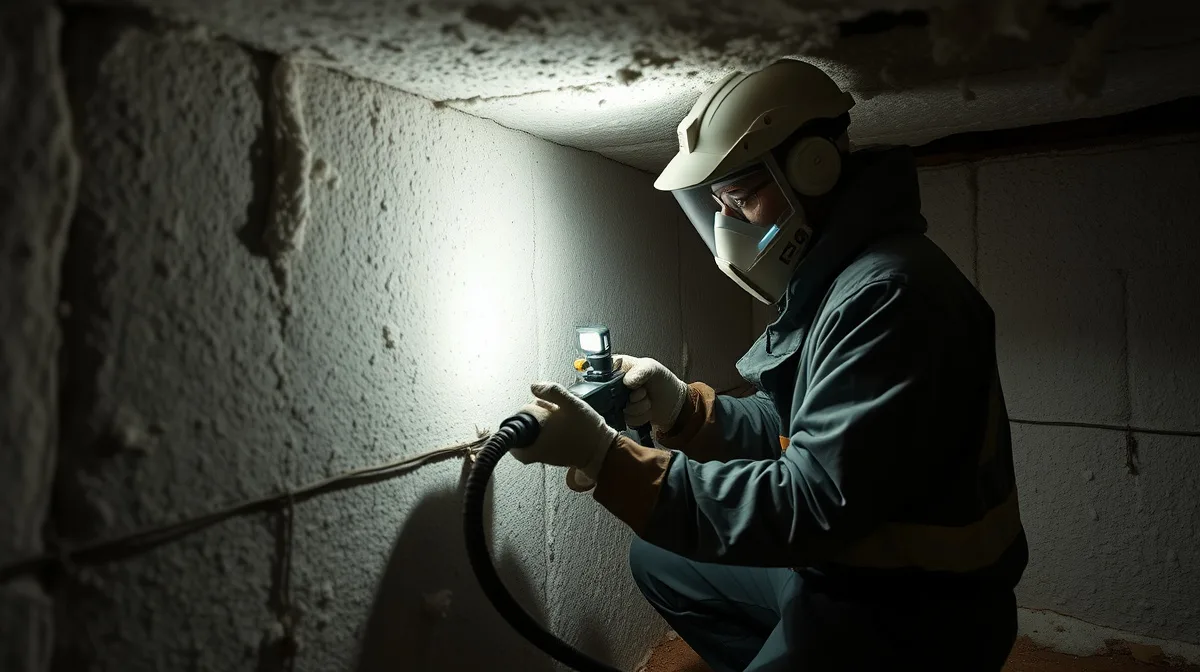
Crawl spaces are the space every other trade forgets about and every homeowner ignores until a pipe bursts. In Show Low, at 6,400 feet with genuine sub-freezing nights for months at a stretch, an unconditioned, vented crawl space sits at almost the same temperature as the outside air. That means every water line, every drain trap, and every ductwork run down there is exposed to the same cold snap that's frosting your windshield. We are a spray-foam-only specialist contractor, and crawl spaces are one of the applications we go deepest on, because closed-cell foam is the one material that solves the moisture problem and the freeze problem in the same pass.
We don't do batt insulation stapled between floor joists, and we don't do the ventilated fiberglass-and-vapor-barrier approach that so many crawl spaces around the White Mountains were built with decades ago. That method leaves every water line dangling in cold, often damp air, and it degrades fast once ground moisture gets into it. Our approach applies closed-cell spray foam directly to the crawl space perimeter walls and rim joist band, converting the crawl space from a vented, outside-temperature cavity into a semi-conditioned space that tracks much closer to the temperature of the house above it. That's the difference between a crawl space that merely meets a code minimum and one that actually keeps your plumbing above freezing on a 10-degree January night.
Why homeowners choose it
- Closed-cell foam hits the IECC Zone 5B R-30+ crawl space target in a single application to the perimeter walls
- Seals the crawl space envelope against outside air, pulling exposed water lines and ductwork out of near-outdoor temperatures
- Closed-cell's moisture resistance stands up to the ground dampness and occasional standing water common in crawl space environments
- Adds rigidity to the rim joist and perimeter band, an area that takes real structural load and needs a denser material than open-cell provides
- Meaningfully reduces (not eliminates) freeze-damage risk to plumbing and fixtures during extended White Mountains cold snaps
- One air-sealed, spray-foamed crawl space typically outperforms and outlasts a vented fiberglass-batt setup that needs periodic re-installation as batts sag or get wet
Why Closed-Cell Is the Only Right Call Down There
Crawl spaces are a moisture environment first and a thermal problem second, and that ordering is exactly why we spray closed-cell foam here and nowhere near open-cell. Open-cell foam is a fine, cost-effective choice for interior wall cavities and conditioned attics, but it's a sponge — it will absorb ground moisture and vapor drive that a crawl space produces year-round, especially after snowmelt soaks into the soil beneath the house. Closed-cell foam's tighter cell structure sheds that moisture instead of holding it, which is the entire reason it's the standard choice for crawl spaces, rim joists, and any other tight, damp cavity across every cold-climate spray foam job we run.
At roughly R-6 to R-7 per inch, closed-cell also gets you to the R-30+ crawl space target with less material thickness than open-cell would need, which matters in a space where clearance is often measured in inches, not feet. And because closed-cell adds real structural rigidity once cured, it reinforces the rim joist band — an area that carries floor load and takes the brunt of outside temperature swings — in a way a soft, air-permeable material simply can't.
Protecting Plumbing Through a White Mountains Winter
This is the angle that matters most to homeowners, and it's the reason we lead with it: an unsealed, vented crawl space in Show Low or Pinetop-Lakeside spends the winter tracking close to outdoor air temperature, and any water line running through it is exposed to that cold for months, not just during a single freeze event. Spray foaming the crawl space perimeter and rim joist changes that equation. It stops cold outside air from moving through the space and lets it hold closer to the conditioned temperature of the living space above, which is the single biggest factor in whether a pipe makes it through a hard freeze intact.
We're straightforward about what this does and doesn't do. Show Low is drier and less snow-heavy than Flagstaff, and we're not selling a guarantee against every possible freeze scenario — extreme, sustained cold snaps can still stress a system regardless of insulation. What closed-cell spray foam in the crawl space delivers is a meaningfully reduced freeze-damage risk, by removing the vented, near-outdoor-air environment that puts plumbing at risk in the first place.
- Seals the crawl space perimeter against outside air infiltration
- Brings the space closer to conditioned-space temperatures rather than outdoor lows
- Reduces (does not eliminate) freeze-damage risk to exposed water lines and drain traps
- Addresses the rim joist band, a common cold-air entry point directly beneath the floor
What the Application Actually Looks Like
We spray the perimeter foundation walls of the crawl space and the rim joist/band joist area where the floor framing meets the foundation, building up closed-cell foam to the thickness needed to hit R-30+ per IECC Zone 5B requirements. Depending on the home, we'll also address any obvious gaps around plumbing and electrical penetrations through the foundation wall while we're already in the space. This is crawl-space-specific work — we're not blowing loose-fill or stapling batts between floor joists, and we're not treating the crawl space as an afterthought tacked onto an attic job.
Every crawl space is a different shape, height, and moisture situation, which is exactly why we do a free on-site assessment before quoting. We need to see vent locations, existing insulation condition, any moisture or standing-water history, and where your plumbing actually runs before we can give you a firm number and a straightforward plan.
Ideal for
- Homes with exposed water supply lines, drain lines, or a water heater located in the crawl space
- Older Show Low, Pinetop-Lakeside, or Taylor homes still running the original vented crawl space with sagging or missing fiberglass batts
- Homeowners who've had a frozen or burst pipe in the crawl space during a past winter
- New builds and additions where the crawl space perimeter needs to hit code-minimum R-values from day one
- Anyone dealing with a cold, drafty floor in the room directly above an unconditioned crawl space
What affects the cost
Crawl Space Spray Foam questions, answered
Crawl spaces are a moisture environment, and closed-cell foam's tighter cell structure resists ground moisture and vapor drive in a way open-cell can't. Closed-cell also delivers a higher R-value per inch and adds structural rigidity to the rim joist band, which is why it's the standard choice for this application across every cold-climate job we do.
It meaningfully reduces the risk by sealing the crawl space against outside air and bringing it closer to conditioned-space temperatures, but no insulation method can guarantee zero freeze risk during an extreme, extended cold snap. We're upfront about that distinction rather than overselling a guarantee.
We spray the crawl space perimeter walls and rim joist area rather than between the floor joists. Sealing the foundation perimeter converts the space itself closer to a conditioned environment, which protects plumbing and ductwork located inside the crawl space — a batt-between-joists approach leaves that same plumbing exposed to outside-air temperatures.
IECC Climate Zone 5B calls for R-30 or better at the crawl space perimeter. Closed-cell foam's roughly R-6-7 per inch gets you there with a manageable application thickness, even in tighter-clearance crawl spaces.
Yes. We'll assess the existing condition during the free on-site visit, remove degraded fiberglass batts as needed, and address any moisture concerns before spraying closed-cell foam to the perimeter walls and rim joist.
Crawl Space Spray Foam done right, by a local White Mountains crew
We're a spray-foam-only specialist — not a general insulation contractor that also offers spray foam as one option among many. Crawl Space Spray Foam isn't a commodity, and the result depends entirely on how carefully it's scoped and installed for your specific home at 6,400 feet on the Mogollon Rim. We assess what your house actually needs, prep and air-seal properly, and install to your elevation-appropriate, IECC Zone 5B R-value target, so the work delivers the comfort and savings it's supposed to.
We serve Show Low, Pinetop-Lakeside, Taylor, Snowflake, Heber-Overgaard, Springerville, Eagar, and Concho. Show Low's winters are real — genuine heating loads at altitude — but drier and lighter on snowfall than Flagstaff, so we scope every job to the White Mountains' actual conditions rather than borrowing assumptions from a heavier-snow climate. Every job starts with a free, no-pressure quote.
Just as important, we treat your home like the system it is. Insulation, air sealing, and ventilation all interact, and getting one right while ignoring the others leaves comfort and savings on the table. When we scope your crawl space spray foam, we look at how it fits the whole picture — so the finished result performs the way it should, holds up through a genuine White Mountains winter, and actually lowers the bills you feel every month, whether you're served by Navopache Electric Cooperative or UniSource Energy Services.
Free assessment
We evaluate your home and give you a clear, itemized quote.
Expert install
We prep, air seal, and install your crawl space spray foam to spec — clean and on schedule.
Savings you can feel
A warmer home, lower heating bills, and honest advice about what your home needs.
Related services
Ready for a free crawl space spray foam quote?
Tell us about your home and we'll put together a clear, no-pressure spray foam insulation quote — built for Show Low's real winters.