Open-Cell Spray Foam Insulation
Open-cell spray foam gives Show Low homes an expanding, air-sealing insulation fill for interior walls and conditioned attics at a lower installed cost than closed-cell — the right call where cavity depth and budget do the deciding.
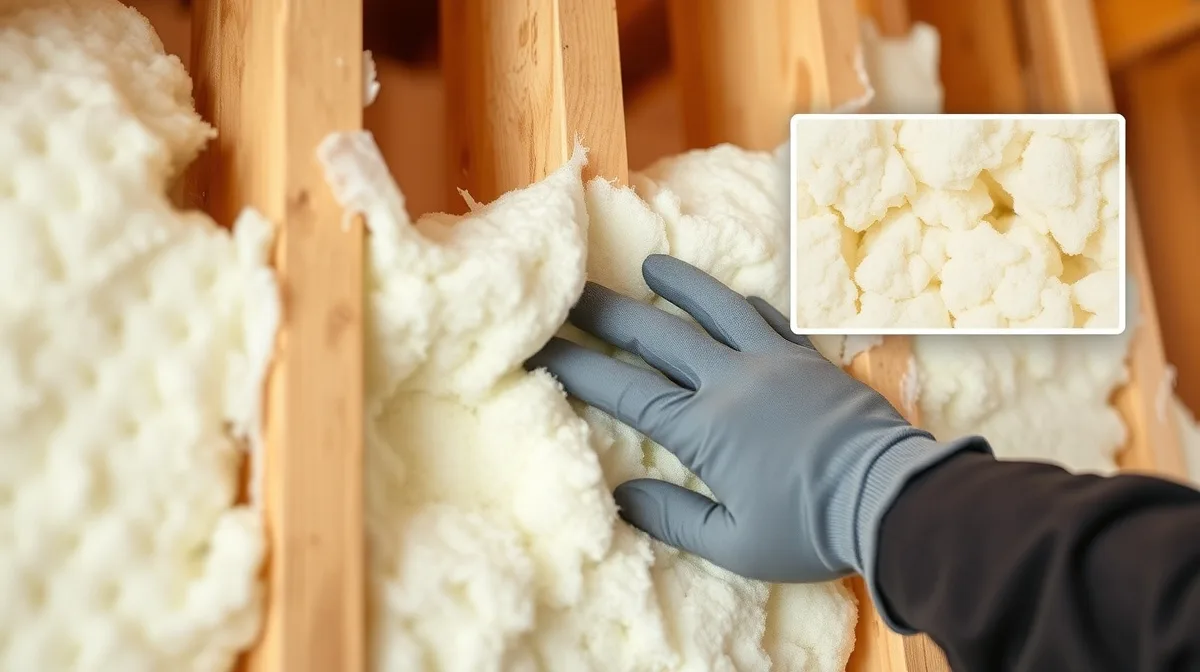
We're not a general insulation company that also does spray foam — spray foam is the only thing we do, which is why we do it better than anyone else in the White Mountains. Open-cell spray foam is where that focus pays off most directly for homeowners watching a budget: it's a lighter, less expensive material than closed-cell, but it still delivers an expanding, monolithic air-seal that fiberglass batts and blown-in cellulose simply cannot match. Applied at roughly R-3.5 to R-3.7 per inch, open-cell fills a standard 2x6 stud bay or a deep attic cavity completely, closing the gaps, penetrations, and air paths that let conditioned air leak out and cold air leak in at 6,400 feet.
Show Low sits in IECC Climate Zone 5B — a genuine four-season climate with real heating bills, but drier and lighter on snow load than Flagstaff's 90-108 inches a year. That distinction matters for material selection. Open-cell doesn't carry closed-cell's vapor-resistance or structural rigidity, which is exactly why we reserve closed-cell for rim joists, crawl spaces, and other moisture-exposed or structural applications. For interior walls and conditioned attic decks, where vapor drive is manageable and the priority is air-sealing plus sound dampening at a fair price, open-cell is the technically correct choice — not a compromise. Every open-cell job we run is scoped to Zone 5B targets: R-20+5ci for walls, R-49 for attics.
Why homeowners choose it
- Lower installed cost than closed-cell — typically $1.50-$2.50/sq ft in a realistic White Mountains range, with a firm number set at your on-site assessment
- Expands to fill irregular stud bays, wire penetrations, and framing gaps completely, eliminating the air channels batts leave behind
- Excellent sound dampening between rooms and floors — a side benefit homeowners notice immediately in shared walls and above garages
- Lighter density means no added structural load on ceiling framing, unlike heavier closed-cell fills
- Semi-permeable to vapor, which allows some assemblies to dry to the interior — appropriate where a full vapor barrier isn't the right call
- Fills the full cavity depth in one pass, closing the small gaps and thermal bypasses that fiberglass batts consistently leave at top and bottom plates
Why Open-Cell Fits Zone 5B Walls and Attics
The case for open-cell isn't just price — it's application fit. In a stud-bay wall or a conditioned attic roof-deck, the job is to stop air movement and hit a solid, code-aligned R-value across the full assembly, not to resist bulk water or add structural strength the framing doesn't need. Open-cell does exactly that at roughly R-3.5 to R-3.7 per inch, filling a 2x6 wall cavity to the R-20+5ci Zone 5B target when paired with continuous exterior insulation, or building attic roof-decks toward R-49 without the added weight closed-cell would put on rafters.
Because open-cell is semi-permeable, it also lets some wall and roof assemblies manage moisture by drying to the interior — a detail that matters in Show Low's drier, lighter-snow version of a cold climate. We don't default to closed-cell everywhere out of habit; we scope each cavity to what the assembly actually needs, and for the majority of interior walls and conditioned attics in this region, that's open-cell.
- R-3.5 to R-3.7 per inch, filling full cavity depth in one pass
- Meets R-20+5ci wall and R-49 attic Zone 5B targets when properly specified
- Semi-permeable — allows appropriate assemblies to dry to the interior
- No added structural load on rafters or ceiling framing
Air-Sealing and Sound Control Together
Every open-cell job is, functionally, an air-sealing job first. Batts and blown-in fiberglass sit in a cavity; open-cell expands to fill it, closing the wire penetrations, top-plate gaps, and framing irregularities that otherwise leak conditioned air year-round. At 6,400 feet, that air-sealing translates directly into fewer drafts, fewer cold spots along exterior walls, and a furnace that isn't fighting constant infiltration through a leaky building envelope.
The sound-dampening benefit is one homeowners often don't ask for but notice immediately once it's installed — shared walls between bedrooms, walls behind home theaters, and ceilings under upstairs bathrooms all go noticeably quieter. It's a genuine side effect of the same expanding fill that stops air movement, not a separate product or upcharge.
- Seals wire penetrations, framing gaps, and top-plate leaks in one continuous application
- Reduces drafts and cold spots along exterior stud-bay walls
- Noticeably quieter shared walls, floors, and ceilings as a direct side effect
When We Recommend Closed-Cell Instead
Because we're spray-foam-only specialists, we don't push one material into every cavity — we scope the job to what the assembly and the climate demand. Open-cell isn't the right call for rim joists, crawl space walls, or any application where moisture exposure or structural rigidity is a real factor; that's closed-cell territory, and we'll tell you so directly during your assessment rather than upselling or downselling based on margin.
For interior walls and conditioned attics, though, open-cell is the technically sound, cost-effective answer for the vast majority of White Mountains homes. We'll walk your specific cavities, check depth and moisture exposure, and give you a straight recommendation — open-cell where it fits, closed-cell only where the application actually calls for it.
Ideal for
- Interior partition walls and stud-bay cavities where sound control matters as much as R-value
- Conditioned attic roof-decks in Zone 5B where a sealed, semi-permeable assembly is appropriate
- Homeowners prioritizing installed cost and air-sealing performance over maximum R-value per inch
- Retrofit walls in older White Mountains homes with drafts and cold spots but no moisture exposure
- New-construction cavities where the assembly is designed to allow interior drying
What affects the cost
Open-Cell Spray Foam questions, answered
Yes, when used in the application it's designed for. Open-cell hits real R-value per inch and, more importantly, delivers an air-seal that stops drafts and infiltration — often the bigger factor in comfort and heating cost at 6,400 feet than R-value alone. We specify it for interior walls and conditioned attics, not for moisture-exposed spaces like crawl spaces or rim joists, where closed-cell is the better fit.
Open-cell typically runs toward the lower end of the $1.50-$5.00/sq ft installed range common to Arizona spray foam work, while closed-cell runs toward the higher end due to its denser material and higher R-value per inch. Exact numbers depend on your cavity depth, square footage, and access — we give a firm figure after a free on-site assessment, not a phone estimate.
Not when it's specified correctly. Open-cell is semi-permeable, which allows appropriate wall and attic assemblies to dry to the interior rather than trapping moisture. We only recommend it where that vapor profile fits the assembly — for cavities with genuine moisture exposure, like crawl spaces or rim joists, we specify closed-cell instead.
Yes. At roughly R-3.5 to R-3.7 per inch, open-cell applied to full roof-deck depth reaches the R-49 target we design toward for Show Low's IECC Zone 5B climate. We measure and confirm depth on-site rather than estimating from a general rule of thumb.
Regularly. A typical White Mountains project might use open-cell across interior walls and the attic roof-deck while specifying closed-cell at the rim joists and crawl space, where moisture and structural demands are different. Being spray-foam-only means we scope each cavity on its merits instead of selling one material for the whole house.
Open-Cell Spray Foam done right, by a local White Mountains crew
We're a spray-foam-only specialist — not a general insulation contractor that also offers spray foam as one option among many. Open-Cell Spray Foam isn't a commodity, and the result depends entirely on how carefully it's scoped and installed for your specific home at 6,400 feet on the Mogollon Rim. We assess what your house actually needs, prep and air-seal properly, and install to your elevation-appropriate, IECC Zone 5B R-value target, so the work delivers the comfort and savings it's supposed to.
We serve Show Low, Pinetop-Lakeside, Taylor, Snowflake, Heber-Overgaard, Springerville, Eagar, and Concho. Show Low's winters are real — genuine heating loads at altitude — but drier and lighter on snowfall than Flagstaff, so we scope every job to the White Mountains' actual conditions rather than borrowing assumptions from a heavier-snow climate. Every job starts with a free, no-pressure quote.
Just as important, we treat your home like the system it is. Insulation, air sealing, and ventilation all interact, and getting one right while ignoring the others leaves comfort and savings on the table. When we scope your open-cell spray foam, we look at how it fits the whole picture — so the finished result performs the way it should, holds up through a genuine White Mountains winter, and actually lowers the bills you feel every month, whether you're served by Navopache Electric Cooperative or UniSource Energy Services.
Free assessment
We evaluate your home and give you a clear, itemized quote.
Expert install
We prep, air seal, and install your open-cell spray foam to spec — clean and on schedule.
Savings you can feel
A warmer home, lower heating bills, and honest advice about what your home needs.
Related services
Ready for a free open-cell spray foam quote?
Tell us about your home and we'll put together a clear, no-pressure spray foam insulation quote — built for Show Low's real winters.