New Construction Spray Foam Insulation
Builder-facing spray foam insulation for new construction across the White Mountains - spec homes, custom builds, additions, and cabins insulated to IECC Zone 5B code targets at the framing stage, not fixed after the fact.
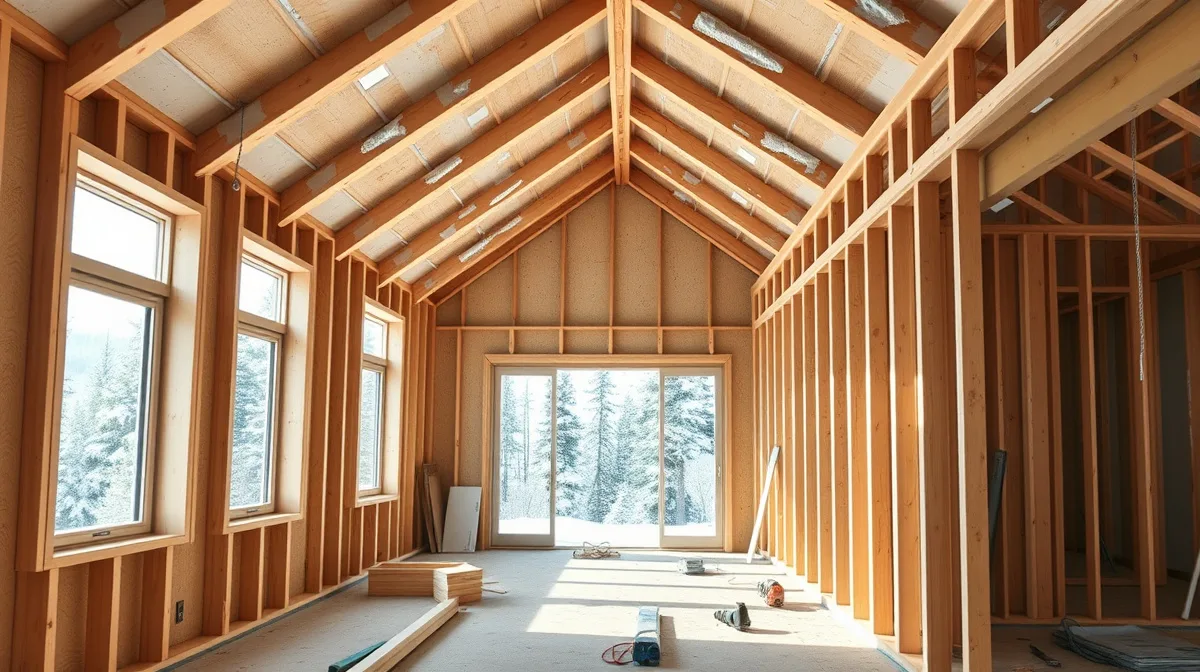
When you're framing a new home at 6,400 feet, insulation isn't something to sort out after the fact - it's part of the structure. We work with builders and general contractors across Show Low, Pinetop-Lakeside, Taylor, Snowflake, and Heber-Overgaard to spray foam spec homes, custom builds, and additions so they hit IECC Zone 5B R-value targets - R-49 attic, R-20+5ci walls, R-30+ crawl space - the first time, without a punch-list callback to chase a failed blower-door test or an inspector's note. Because spray foam air-seals and insulates in a single application, your framing crew, electrician, and plumber can finish rough-in and hand the shell to one insulation sub instead of scheduling a separate weatherization trade behind them. We're not a general insulation company squeezing spray foam into a broader material lineup - spray foam is the only thing we install, on new construction and everything else, which is why builders bring us in early instead of treating insulation as an afterthought.
New construction here isn't only full-time residences. A meaningful share of what gets built in Pinetop-Lakeside, Heber-Overgaard, and the pine country around Show Low is cabins and second homes that sit unheated or minimally heated for weeks at a stretch between owner visits. That's a different envelope problem than a year-round house: pipes, water heaters, and mechanical rooms need to survive hard freezes with no one home to notice a failure starting. Closed-cell spray foam in the crawl space, rim joist, and exterior walls gives that kind of structure a moisture-resistant, freeze-resistant envelope from day one, plus real structural rigidity in the stud bays and roof deck. If you're building a getaway property rather than a full-time residence, we can spec the assembly around that use pattern instead of defaulting to a standard occupied-home layout.
Why homeowners choose it
- Hits IECC Zone 5B R-value targets (R-49 attic, R-20+5ci walls, R-30+ crawl space) at first inspection, no rework
- Air-seals and insulates the entire shell in one trade and one scheduling slot behind rough-in
- Closed-cell option adds real racking strength to stud bays, roof deck, and rim joist as it insulates
- Freeze-resistant, moisture-resistant envelope built in for cabins and second homes left unheated part of the year
- Fewer post-closing callbacks - no cold-spot or draft complaints once drywall and finishes are in
- One insulation sub covers attic, walls, crawl space, garage, and rim joist on the same site visit
Hitting IECC Zone 5B From the Framing Stage
Show Low and the surrounding White Mountains fall under IECC Climate Zone 5B, which sets real R-value targets for new construction: R-49 in the attic, R-20+5ci in exterior walls, R-30+ in crawl spaces. Those numbers are easy to spec on paper and much harder to hit in the field with batt or blown-in products once framing, wiring, and plumbing runs have chewed up cavity depth. Spray foam solves that at the source - closed-cell foam delivers roughly R-6 to R-7 per inch, so a standard 2x6 wall cavity can reach code-level R-value without furring out the wall or adding rigid foam sheathing as a separate step.
We coordinate with your framing schedule to spray after rough electrical and plumbing but before drywall, so the crew sees the finished assembly and signs off before anything gets covered. That timing matters for inspection: a sealed, uniform foam application is straightforward for an inspector to verify against Zone 5B requirements, compared to batt insulation where gaps and compression around plumbing and wiring are common failure points on a first pass.
- Attic / roof-deck: R-49 target hit with closed-cell foam at the roof deck for a conditioned attic
- Walls: R-20+5ci target reached in-cavity, no added rigid sheathing step needed
- Crawl space: R-30+ target with closed-cell foam on walls and rim area
- Uniform, gap-free application simplifies energy-code inspection sign-off
The Cabin and Second-Home Case for Spray Foam
A large share of new construction in Pinetop-Lakeside, Heber-Overgaard, and the pine country around Show Low is cabins and second homes, not full-time residences. Those structures spend real stretches of the year unheated or barely heated between owner visits, which changes the insulation math: the goal isn't just comfort while occupied, it's protecting plumbing, water heaters, and mechanical equipment through freeze cycles when no one is there to catch a problem early. Closed-cell spray foam's moisture resistance matters here in a way it doesn't in a year-round home - it won't wick or hold water the way fiberglass batt can if a pipe does fail, and it keeps performing at full R-value even after a hard freeze-thaw cycle.
Building this way at the framing stage also means less to retrofit later if a second home eventually becomes a full-time residence, or if owners start spending more weekends there. The envelope is already built to Zone 5B cold-climate standards, so there's no gap between how the structure was insulated and how it's actually being used.
- Closed-cell foam in rim joist and crawl space protects plumbing and mechanical rooms during unoccupied stretches
- Moisture resistance holds up through freeze-thaw cycles without losing R-value
- Envelope is already cold-climate-ready if a second home later becomes a full-time residence
Coordinating With Your Framing and Trade Schedule
New construction runs on a schedule, and insulation is a hard dependency between rough-in and drywall. We work directly with builders and GCs to slot spray foam application after electrical, plumbing, and any structural inspections are cleared, and before insulation cover inspection and drywall start. Because one crew handles attic, walls, crawl space, garage, and rim joist in a single visit, you're not coordinating separate trades or separate schedule windows for each assembly - it's one line item on the build schedule instead of three or four.
We're happy to walk plans with a builder or GC before framing is complete to flag any cavity-depth or assembly decisions that affect the R-value targets - for example, whether a 2x6 wall with closed-cell fill needs any adjustment versus a 2x4 wall that would fall short of R-20+5ci without added exterior rigid insulation. Getting that conversation done at the plan stage avoids surprises once the crew is on site.
Ideal for
- Spec home builders who need code-compliant insulation locked in without redesigning the envelope mid-build
- Custom home builds in Show Low, Pinetop-Lakeside, Taylor, Snowflake, and Heber-Overgaard
- Room additions and conversions that need to match or exceed the R-values of the original structure
- Cabin and second-home builds that will sit unheated or lightly heated for stretches between owner visits
- General contractors who want a single insulation sub for attic, wall, crawl space, and rim joist work
What affects the cost
New Construction questions, answered
Both. On new construction we typically work directly with the builder or general contractor to schedule around framing, rough-in, and inspection milestones, though custom-build homeowners who are managing their own project are welcome to contact us directly as well.
It's the main reason builders choose it for Zone 5B new construction. Closed-cell and open-cell spray foam deliver a uniform, gap-free R-value across the attic, walls, and crawl space with no compression or voids around wiring and plumbing - the failure points that most often trip up a first-pass inspection with batt insulation.
The priority shifts from day-to-day comfort to freeze protection for plumbing and mechanical equipment during unoccupied stretches. We typically spec closed-cell foam more heavily in the crawl space, rim joist, and exterior walls of these builds since it holds its R-value and resists moisture through freeze-thaw cycles better than options chosen purely for cost.
After rough electrical, plumbing, and any framing inspections are cleared, and before drywall goes up. That timing lets the crew and any inspector see and verify the completed assembly while it's still exposed, then drywall closes it in.
Yes, and it's common. A typical spec might use closed-cell for the rim joist, crawl space, and roof deck where moisture resistance and R-value density matter most, with open-cell in standard interior wall cavities where budget and vapor considerations favor it.
New Construction done right, by a local White Mountains crew
We're a spray-foam-only specialist — not a general insulation contractor that also offers spray foam as one option among many. New Construction isn't a commodity, and the result depends entirely on how carefully it's scoped and installed for your specific home at 6,400 feet on the Mogollon Rim. We assess what your house actually needs, prep and air-seal properly, and install to your elevation-appropriate, IECC Zone 5B R-value target, so the work delivers the comfort and savings it's supposed to.
We serve Show Low, Pinetop-Lakeside, Taylor, Snowflake, Heber-Overgaard, Springerville, Eagar, and Concho. Show Low's winters are real — genuine heating loads at altitude — but drier and lighter on snowfall than Flagstaff, so we scope every job to the White Mountains' actual conditions rather than borrowing assumptions from a heavier-snow climate. Every job starts with a free, no-pressure quote.
Just as important, we treat your home like the system it is. Insulation, air sealing, and ventilation all interact, and getting one right while ignoring the others leaves comfort and savings on the table. When we scope your new construction, we look at how it fits the whole picture — so the finished result performs the way it should, holds up through a genuine White Mountains winter, and actually lowers the bills you feel every month, whether you're served by Navopache Electric Cooperative or UniSource Energy Services.
Free assessment
We evaluate your home and give you a clear, itemized quote.
Expert install
We prep, air seal, and install your new construction to spec — clean and on schedule.
Savings you can feel
A warmer home, lower heating bills, and honest advice about what your home needs.
Related services
Ready for a free new construction quote?
Tell us about your home and we'll put together a clear, no-pressure spray foam insulation quote — built for Show Low's real winters.