Spray Foam Insulation Cost Guide for Show Low, AZ Homes (2026)

"How much does spray foam cost?" is the first question every White Mountains homeowner asks, and it's a fair one — spray foam carries a higher sticker price than fiberglass batts or blown-in cellulose, and nobody should sign a contract without understanding what they're paying for and why. The honest answer is that spray foam insulation cost isn't one number. It's a range that depends on which material you use, where in the house it's going, how hard that space is to access, and how deep the cavity needs to be filled to hit code-level R-value at 6,400 feet in IECC Climate Zone 5B. This guide breaks all of that down in plain numbers, application by application, so you walk into a quote conversation already knowing what questions to ask.
We're a spray-foam-only specialist serving Show Low, Pinetop-Lakeside, Taylor, Snowflake, and Heber-Overgaard — we don't sell blown-in, batt, or general weatherization services, so this isn't a sales pitch dressed up as a cost guide for whichever material happens to be sitting in the truck that week. Every number below reflects what open-cell and closed-cell spray foam actually cost to install correctly in a genuine cold, four-season climate that's drier than Flagstaff but still sits well below freezing on winter nights. Treat every figure here as a realistic planning range, not a quote — cavity depths, framing conditions, and existing insulation vary house to house, and the only way to get a firm number is a free on-site assessment.
Open-Cell vs. Closed-Cell: What Each One Costs and Why
Spray foam is sold and priced by two different measures, and mixing them up is where most cost confusion starts. Material cost is typically quoted per board foot — one square foot of coverage at one inch of thickness. Installed cost, the number that actually matters to a homeowner, is quoted per square foot of the surface being sprayed, and it accounts for material, labor, equipment, and the number of inches applied to hit your target R-value. Because open-cell and closed-cell have very different densities, R-values per inch, and raw material costs, they land in different places on both scales.
- Open-cell spray foam: roughly $0.40–$0.65 per board foot in material cost; installed cost typically runs $1.50–$3.25 per square foot depending on cavity depth and access.
- Closed-cell spray foam: roughly $1.00–$1.50 per board foot in material cost — closed-cell uses a denser, more expensive chemistry — with installed cost typically running $2.50–$5.00 per square foot.
- Across the whole site, realistic installed spray foam pricing in the White Mountains falls in the $1.50–$5.00 per square foot range, with open-cell applications at the lower end and closed-cell applications in tight or high-R cavities at the upper end.
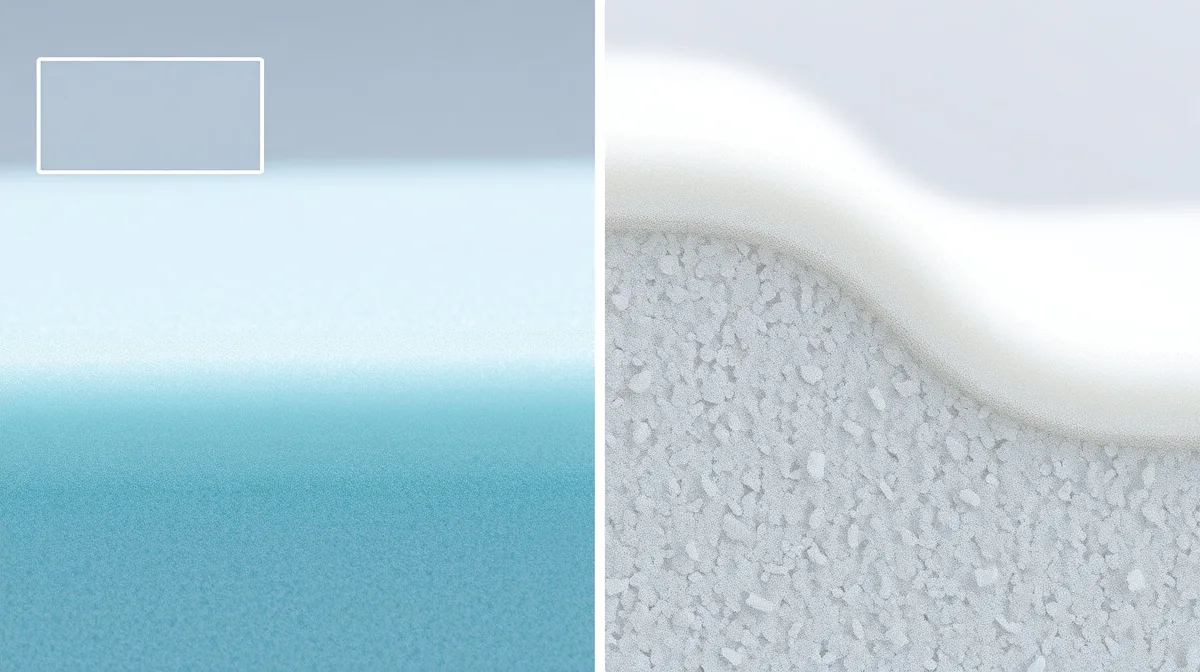
The gap between the two isn't arbitrary. Closed-cell spray foam runs roughly R-6 to R-7 per inch, is dense enough to add real structural rigidity to a wall or roof assembly, and resists moisture in a way open-cell simply doesn't — which is exactly why it's the right call for rim joists, crawl spaces, and other tight, moisture-exposed cavities. Open-cell runs roughly R-3.5 to R-3.7 per inch, is lighter and more affordable, and still delivers a strong air-seal — which makes it the smart, budget-conscious choice for interior stud walls and conditioned attics where you have the cavity depth to work with and vapor considerations don't demand closed-cell's moisture resistance. Neither one is universally "better" — the right choice is a function of where it's going, and that's a big part of what a proper on-site assessment sorts out before you get a number.
Cost by Application: Where the Money Actually Goes
Spray foam cost isn't uniform across a house because every application has different access conditions, different target R-values, and often a different material entirely. Here's what each major application typically runs in Show Low and the surrounding White Mountains, and why.
Attic / Roof-Deck Spray Foam Cost
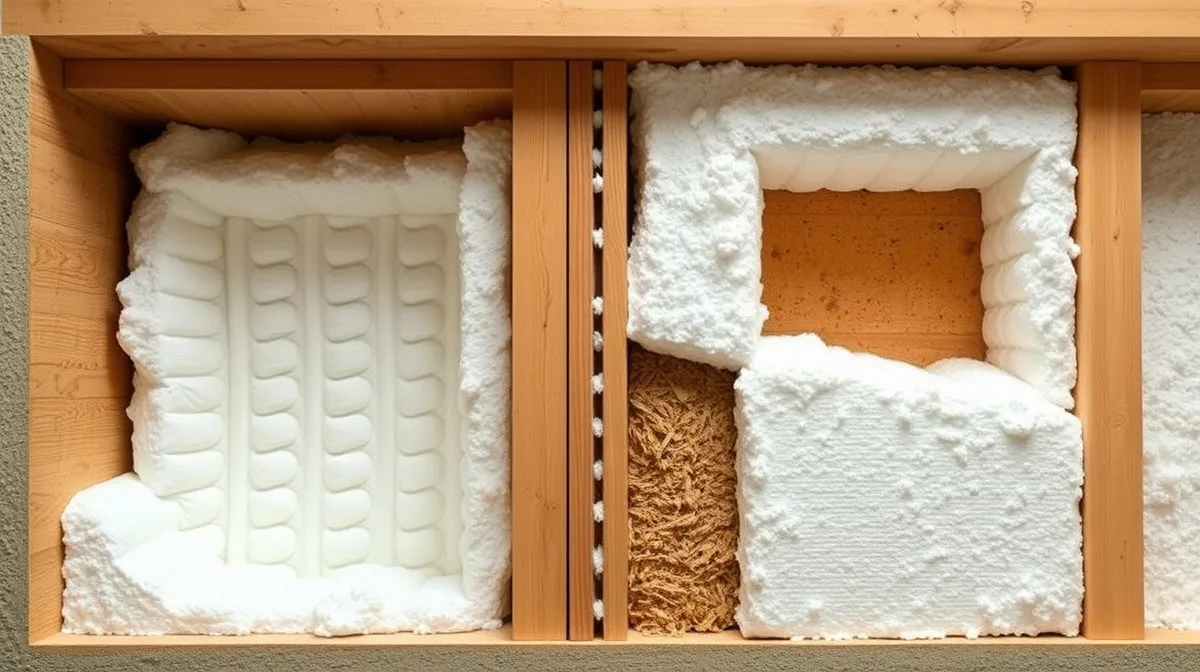
Attic work is usually priced by square footage of roof deck or ceiling plane, and it's where cavity depth matters most. Hitting the IECC Zone 5B attic target of R-49 with open-cell foam means applying roughly 13–14 inches of material — a lot of volume, which pushes the installed cost to roughly $1.75–$3.25 per square foot even though open-cell material itself is the more affordable option. Some homes use a hybrid approach — a thinner closed-cell base layer against the roof deck for air-sealing and moisture control, topped with open-cell to build up total R-value more economically — which can land in a similar range while improving performance in problem areas like valleys and hip roofs. Roof-deck application (spraying the underside of the roof rather than the attic floor) converts the attic into semi-conditioned space, which protects any ductwork or HVAC equipment routed up there and is common in White Mountains cathedral-ceiling and vaulted designs.
Wall Spray Foam Insulation Cost
Wall pricing depends heavily on whether you're filling standard 2x4 or 2x6 stud bays and whether the project is new construction with open framing or a retrofit working through existing drywall. In open stud bays, open-cell fill to hit the R-20+5ci Zone 5B wall target typically runs $1.50–$2.75 per square foot of wall area. Closed-cell walls — chosen where a builder wants maximum R-value per inch in a thinner 2x4 cavity, or where structural rigidity adds value to the assembly — usually run $2.75–$3.75 per square foot given the material cost difference. Retrofit wall work in an already-finished home (drilling and injecting foam into closed cavities) is priced differently than open-frame spraying and generally costs more per square foot due to the additional labor and patching involved.
Crawl Space Spray Foam Cost
Crawl spaces at 6,400 feet are a freeze-protection problem as much as an efficiency problem, and closed-cell is the standard here — its moisture resistance is essential in a space that sits directly against soil and foundation walls. Hitting the R-30+ crawl space target with closed-cell foam typically costs $3.00–$5.00 per square foot of wall and rim area, landing at the higher end of the overall spray foam range. Crawl space pricing also carries a labor premium that has nothing to do with material: tight, low-clearance access, existing debris or old insulation that may need to be cleared first, and the simple fact that a crew is working on their backs in a confined space all add time to the job compared to an open attic or wall bay.
Garage Spray Foam Insulation Cost
Garage ceilings and shared walls — especially under a bonus room or bedroom, or adjacent to a mechanical room — typically run $1.75–$3.50 per square foot, with the material choice depending on whether the garage is over occupied living space (favoring closed-cell for the added air-seal and rigidity) or simply protecting a detached structure from freeze damage to stored plumbing, a water heater, or vehicles (where open-cell is often sufficient). Garage door headers and the band area around overhead doors are common weak points that add a modest amount of detail labor to an otherwise straightforward job.
Rim Joist / Band Joist Spray Foam Cost
The rim joist — the band that runs around the perimeter where the floor framing meets the foundation — is a small-area, high-value target. It's one of the leakiest details in older White Mountains framing, and it's exposed to the same moisture and freeze conditions as a crawl space, so closed-cell is the standard material here too. Because the area involved is small but the work is detailed — fitting foam precisely around joist bays, wiring, and plumbing penetrations — rim joist spray foam tends to sit at the top of the overall cost range, generally $3.50–$5.00 per square foot of band area, even though the total dollar cost for a typical home's rim joist run is modest simply because the surface area is small.
New Construction Spray Foam Cost
New construction is where spray foam is most cost-efficient per square foot, because the crew is spraying open stud bays and an open roof deck before drywall goes up — no cutting, no working around existing finishes, no clearing old insulation. Whole-envelope packages (walls, attic or roof deck, and rim joist together) for new builds typically run $1.50–$3.00 per square foot of treated envelope area, which is why builders working toward IECC Zone 5B code compliance from day one often find spray foam a more competitive line item than it appears to be as a stand-alone retrofit.
What Drives Your Price Up or Down
Three factors explain almost all of the spread inside every range above, and understanding them is the difference between comparing quotes intelligently and just picking the lowest number on paper.
- Accessibility — an open, walk-in attic or unfinished stud bay is fast to spray. A cramped 18-inch crawl space, a hip roof with valleys and dormers, or a retrofit that requires drilling and patching finished walls all add labor hours that show up directly in the per-square-foot price.
- Cavity depth — hitting R-49 in a 2x10 rafter bay takes far less material than hitting it in a shallow attic with limited depth to work with, and thin cavities sometimes force a closed-cell choice specifically because it delivers more R-value per inch than the space allows for with open-cell.
- Existing insulation removal — old, settled fiberglass batts, rodent-contaminated blown-in material, or failing spray foam from a previous job often need to be removed before new foam goes in. Removal and disposal is priced separately from the foam application itself and can meaningfully change a project's total.
- Home age and framing condition — older White Mountains site-built homes sometimes have irregular stud spacing, added blocking, or non-standard rafter depths that take more time to fill cleanly than a modern, code-built cavity.
- Scope bundling — spraying an attic and rim joist in the same visit, for example, is more efficient than two separate mobilizations, so bundling applications into one project often lowers the effective per-square-foot cost across the whole job.
Realistic Total Project Costs for a Show Low Home
For a typical 1,800–2,400 square foot White Mountains home at 6,400 feet, here's how the applications above tend to add up into whole-project ranges. These are planning numbers meant to help you budget and compare — not a quote for a specific address, roofline, or foundation type.
- Attic or roof-deck spray foam only (open-cell, hitting R-49): roughly $3,500–$7,500 for an average attic footprint.
- Rim joist / band joist spray foam only (closed-cell, full perimeter): roughly $1,200–$2,800 depending on foundation shape and joist bay count.
- Crawl space spray foam only (closed-cell, walls and rim area, hitting R-30+): roughly $3,000–$6,500 depending on crawl space size and access.
- Garage ceiling and shared-wall spray foam: roughly $1,500–$4,000 depending on garage size and whether it's under living space.
- Whole-envelope retrofit (attic, walls, crawl space, and rim joist together): roughly $12,000–$28,000+ for a full-house project, with bundling discounts often applied versus pricing each application separately.
- New construction full envelope package (walls, roof deck, rim joist): roughly $8,000–$16,000 built into the build budget for an average White Mountains home footprint, reflecting new construction's lower per-square-foot cost.
Homes in Pinetop-Lakeside and Heber-Overgaard with steeper, more complex rooflines or cabin-style construction, and older site-built homes in Taylor or Snowflake with irregular framing, tend to land toward the upper end of these ranges. Newer, simpler-footprint homes and any new-construction project tend to land toward the lower end.
Does Spray Foam Pay for Itself? Heating-Bill Payback at 6,400 Feet
Show Low sits at roughly 6,400 feet in a genuine IECC Zone 5B climate — this is a heating-cost problem, not a cooling-cost problem. Winter nights regularly drop well below freezing across Show Low, Pinetop-Lakeside, Taylor, Snowflake, and Heber-Overgaard, and homes served by Navopache Electric Cooperative or UniSource Energy Services (UES) run their heating systems hard for months at a time. Spray foam's payback case is built on that reality: because it air-seals and insulates in a single application, it stops both conductive heat loss through the cavity and the drafty air infiltration that fiberglass batts and blown-in material don't fully address on their own. That combination is why spray foam retrofits in cold-climate markets typically deliver noticeably larger heating-bill reductions than an R-value-for-R-value swap of a leakier material would suggest on paper.
The applications with the fastest payback are usually the ones addressing the biggest existing gaps: an under-insulated attic losing heat straight up through the roof, or a rim joist band that's been leaking cold air around the whole perimeter of the house for decades. Homeowners who spray foam those two areas together on an older, poorly-insulated White Mountains home are typically looking at payback measured in single-digit years through reduced heating costs alone — before accounting for the added comfort of eliminating cold floors and drafty rooms, or the moderate reduction in ice-dam risk that a properly sealed, insulated roof assembly provides given the region's real but comparatively light ~19 inches of annual snowfall. Newer, already-reasonably-insulated homes see a longer but still real payback window, since there's less of a gap for spray foam to close.
Get a Firm Number: Free On-Site Spray Foam Quote
Every range in this guide exists to help you plan and compare, not to replace an actual quote. The only way to know what your attic, walls, crawl space, garage, or rim joist will really cost is to have someone measure the cavities, check the framing, look at what's already installed, and account for access — all of which we do on-site, for free, with no obligation. Because we're a spray-foam-only specialist rather than a general insulation contractor who also happens to offer spray foam, our on-site assessments are built around exactly the material and applications covered in this guide — not a menu of unrelated products we're trying to steer you toward. Call 844-967-5247 or email josh@contractorschoiceagency.com to schedule a free on-site spray foam assessment anywhere in Show Low, Pinetop-Lakeside, Taylor, Snowflake, Heber-Overgaard, or the broader Springerville, Eagar, and Concho area, and walk away with a firm, written number instead of a planning range.
Frequently asked questions
Installed spray foam typically runs $1.50–$5.00 per square foot in the White Mountains, with open-cell applications at the lower end and closed-cell applications in tight or high-moisture cavities at the upper end. Whole-house retrofit projects covering attic, walls, crawl space, and rim joist together typically land in the $12,000–$28,000+ range for an average 1,800–2,400 square foot home, while single-application projects like an attic-only or rim-joist-only job run considerably less. The only way to get an exact number for your home is a free on-site assessment, since cavity depth, access, and existing insulation all shift the total.
Yes — closed-cell typically costs $2.50–$5.00 per square foot installed versus $1.50–$3.25 for open-cell, reflecting closed-cell's denser chemistry, roughly R-6 to R-7 per inch R-value, and added moisture resistance. It's worth the premium specifically where those properties matter most: rim joists, crawl spaces, and other tight or moisture-exposed cavities where closed-cell's structural rigidity and higher R-value per inch let it perform in spaces open-cell isn't suited for. In open attic space or standard interior walls where cavity depth isn't constrained, open-cell often delivers comparable real-world performance at a lower cost, which is why we don't default to closed-cell everywhere.
Attic spray foam in Show Low and the surrounding White Mountains typically runs $1.75–$3.25 per square foot of roof deck or ceiling plane when using open-cell foam to hit the IECC Zone 5B R-49 target, which usually requires roughly 13–14 inches of material. Some projects use a hybrid approach — a thin closed-cell base layer for air-sealing, topped with open-cell to build R-value more economically — which can land in a similar range while improving performance around valleys, hips, and other detail-heavy roof areas.
For homes with real existing gaps — an under-insulated attic or a leaky, uninsulated rim joist, both common in older White Mountains housing stock — spray foam's combined air-seal-plus-insulate performance typically delivers meaningful heating-bill reductions through Show Low's genuine four-season winters, often paying back over a single-digit number of years through reduced heating costs on Navopache or UniSource accounts. Newer or already better-insulated homes see a longer but still real payback window. Because payback depends on your current insulation condition, heating system, and local rates, we calculate it specifically during the free on-site assessment rather than quoting a generic number.
Spray foam's material chemistry and installed labor cost more per square foot than fiberglass batts or blown-in cellulose because it's doing two jobs in one application — sealing air leaks and insulating the cavity — where batt and blown-in materials only insulate and require a separate air-sealing step to match spray foam's real-world performance. Closed-cell foam adds further cost because it also contributes structural rigidity and moisture resistance that loose-fill materials simply don't provide. The higher upfront cost reflects a more complete building-envelope solution installed in a single visit, not just a pricier version of the same product.
Ready for a free quote?
Tell us about your home and we'll build a clear, no-pressure quote.