How Spray Foam Insulation Cuts Heating Costs and Protects Pipes in a Show Low Winter
Show Low sits at roughly 6,400 feet on the Mogollon Rim, and every winter that elevation makes itself known. Overnight lows drop below freezing for weeks at a stretch from November through February, and IECC Climate Zone 5B classifies this as a genuine four-season cold climate — not a mild Southwest market where insulation is an afterthought. For homeowners and builders in Show Low, Pinetop-Lakeside, Taylor, Snowflake, and Heber-Overgaard, that means two very real, related problems: heating bills that climb every time the mercury drops, and exposed plumbing that's one cold snap away from a frozen — or burst — pipe. Spray foam insulation addresses both, and it does it in a way fiberglass and cellulose structurally can't.
The Heating-Cost Problem at 6,400 Feet
Older, site-built homes across the White Mountains were often insulated to standards that predate current IECC Zone 5B targets — attic R-49, walls at R-20+5ci, and crawl spaces at R-30+. When a home falls short of those numbers, the furnace or heat pump has to work harder and longer to hold a comfortable indoor temperature against a cold exterior, and that gap shows up directly on your monthly bill. Traditional batt and blown-in insulation only address one side of the equation — thermal resistance — while leaving gaps, seams, and penetrations that let cold air infiltrate around the insulation entirely. In a climate where the temperature differential between inside and outside air can exceed 60 degrees on a January night, those small gaps add up to a meaningful, continuous heat loss.
Where Spray Foam Actually Saves You Money
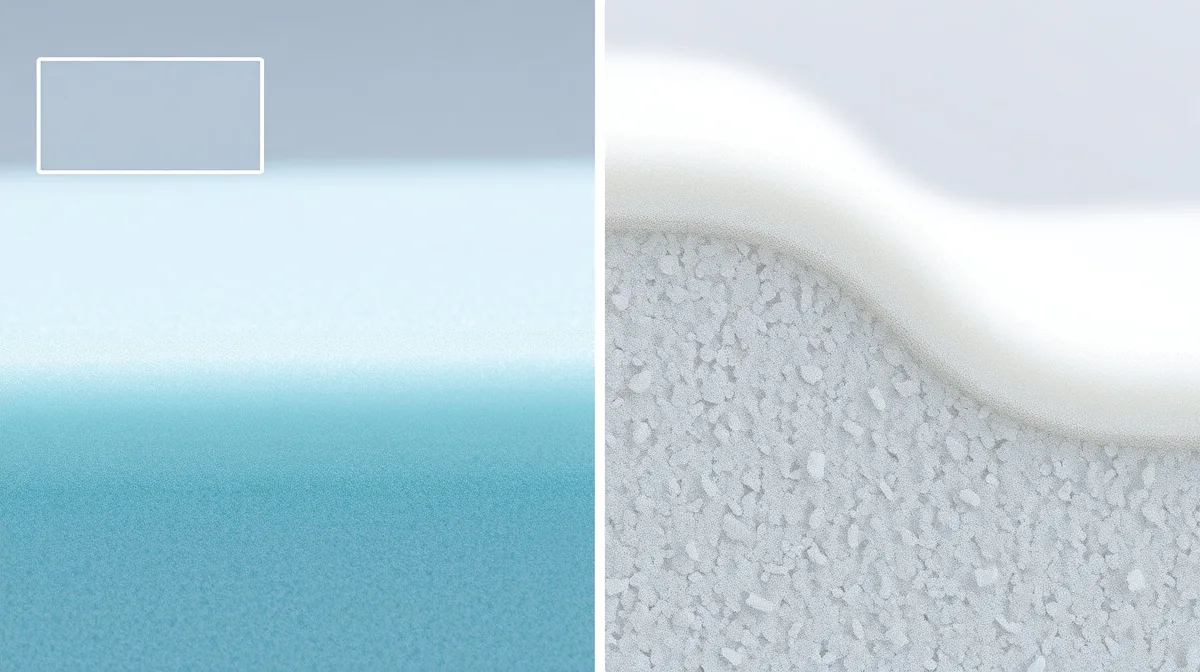
Spray foam insulates and air-seals in the same application step. Closed-cell foam expands to fill every irregular gap in a cavity, delivering roughly R-6 to R-7 per inch, while open-cell foam runs closer to R-3.5 to R-3.7 per inch with a strong air-seal of its own. That combination matters more here than it would in a mild climate, because it closes off the infiltration pathways that batt insulation simply can't reach — the framing gaps, the top-plate penetrations, the rim joist band — while simultaneously hitting Zone 5B R-value targets in less cavity depth. The practical result is a home that holds its heat instead of leaking it out around the insulation, which reduces the load your heating system fights on the coldest White Mountains mornings. The applications that matter most for heating-cost reduction are:
- Attic and roof-deck spray foam — creates a sealed, conditioned attic instead of a vented cold attic, targeting the R-49 standard directly
- Wall cavity spray foam — closes draft paths and cold spots common in older Show Low framing while hitting R-20+5ci
- Rim joist / band joist spray foam — seals one of the single leakiest bands in the entire structure
- Crawl space spray foam — stops cold air from moving up through floor systems into living space above
The Ice-Dam Question, Kept in Proportion
Show Low gets real snow — an average of about 19 inches a year — but that's a fraction of what a true heavy-snow market like Flagstaff sees at a similar elevation. Ice dams happen when heat escaping through an under-insulated, vented attic warms the underside of the roof deck enough to melt snow, which then refreezes at the colder eaves. Roof-deck spray foam application reduces that heat differential by conditioning the attic space directly, which meaningfully lowers ice-dam risk here. It's worth being honest about scale, though.
Crawl Spaces and Rim Joists: Where Freeze Protection Actually Happens
The more consistent freeze-protection concern in Show Low isn't roofline ice — it's what happens underneath the house. Unconditioned crawl spaces and the rim joist band between floors are where exposed plumbing runs closest to outside air, and on a sub-20-degree morning, that's exactly where a pipe can freeze if the space around it isn't performing. Closed-cell spray foam applied to crawl space walls and the rim joist band brings that area up toward the R-30+ target for crawl spaces, denser and more moisture-resistant than open-cell, which matters in a space that sees ground moisture as well as cold air. Garages present a similar pattern — an attached or detached garage with spray foam on the ceiling and walls stops cold transfer into the space above while also protecting anything stored inside, including plumbing runs, water heaters, or a laundry hookup, from freeze damage.
- Crawl space rim/band area — closed-cell foam directly around exposed supply lines and shutoff valves
- Garage ceilings and walls — protects water heaters, laundry hookups, and any plumbing routed through garage space
- Cantilevered floor sections and bay windows — common cold-floor and pipe-freeze points in older White Mountains construction
- Unheated additions or mudrooms with plumbing runs through exterior walls
What This Means for Your Navopache or UniSource Bill
Homes in this service area are served by Navopache Electric Cooperative and UniSource Energy Services, and whether your system runs on electric resistance heat, a heat pump, or gas furnace, the physics are the same: every degree your envelope leaks is a degree your heating system has to replace. We won't hand you a made-up dollar figure — every home's baseline insulation, square footage, and heating equipment are different, and the honest way to get a real number is a free on-site assessment where we can look at your attic, walls, and crawl space directly. What we can tell you is that closing the air-leak pathways spray foam addresses reduces the workload on whichever system is keeping your house warm, which is the mechanism behind lower heating costs, not a guess.
Why a Specialist Matters Here
We're not a general insulation company that also does spray foam — spray foam is the only thing we do, which is why we do it correctly for a 6,400-foot climate rather than treating it like an upsell. Getting heating-cost reduction and freeze protection right depends on choosing the correct foam type and depth for each application — attic, wall, rim joist, or crawl space — and installing it to the density and thickness that actually performs at this elevation. That's the depth of attention a spray-foam-only specialist brings that a generalist crew moving between five different insulation materials typically doesn't.
Frequently asked questions
It depends on your home's current insulation levels, square footage, and heating system, so we won't quote a specific dollar figure without seeing the house. What we can say is that sealing air-leak pathways at the attic, walls, rim joist, and crawl space directly reduces the heat loss your furnace or heat pump has to compensate for — the mechanism behind lower bills is real, even though the exact number varies home to home. A free on-site assessment is the only way to get a firm estimate for your property.
Not to the same degree. Show Low averages about 19 inches of snow a year, compared to Flagstaff's 90 to 108 inches at a similar elevation, so ice-dam risk here is real but proportionately lighter. Roof-deck spray foam application meaningfully reduces the attic heat differential that causes ice dams, but for most Show Low homeowners, heating-cost savings and freeze protection are the bigger reasons to insulate — ice-dam mitigation is a secondary benefit, not the headline.
Closed-cell spray foam applied to crawl space walls, the rim joist band, and garage ceilings/walls significantly reduces the cold-air infiltration around exposed plumbing in those unconditioned spaces, which lowers freeze risk. It's not a guarantee against every extreme cold snap, but bringing a crawl space toward the R-30+ Zone 5B target and sealing the rim joist band closes off the primary pathway cold air uses to reach pipes in the first place.
Ready for a free quote?
Tell us about your home and we'll build a clear, no-pressure quote.